By Dr. Keswani, MD — Forever Medspa & Wellness Center
Not every eye-area concern is about volume. Dark circles, thin crinkly skin, crow’s feet and heavy upper lids each have their own causes, and their own honest answers. Here’s what actually helps, and what doesn’t.
Why the skin under the eyes is different
The lower-lid skin is special. Unlike cheek skin, it has no fat under it and no hair follicles. It folds every time you blink, and it sits forward on top of the cheek, where the sun hits it. That’s why it gets thin, crinkly and sun-damaged before skin almost anywhere else.
Dark circles: usually more than one cause
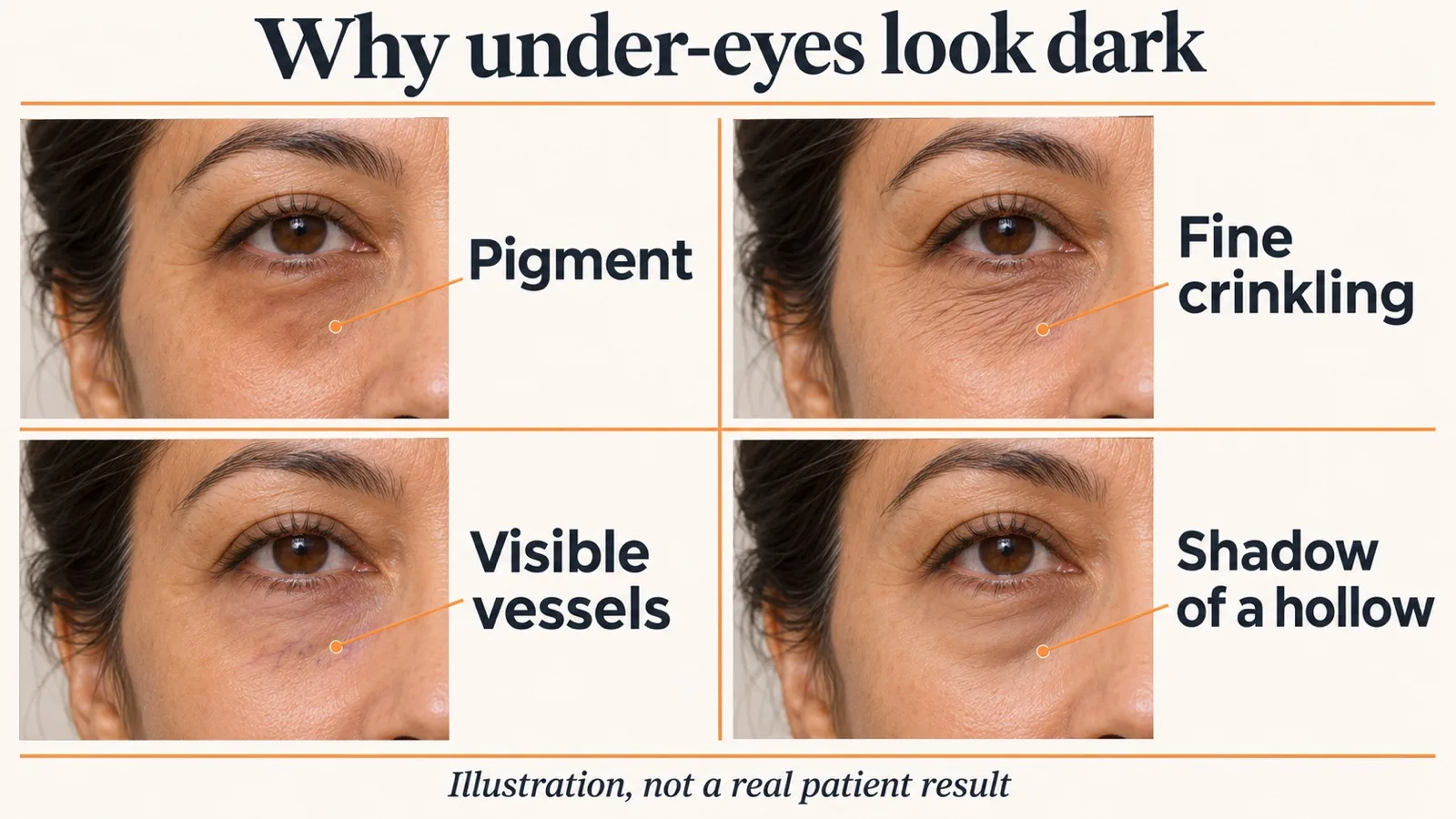
Dark circles usually come from several things at once:
- Pigment from the constant small injury of blinking.
- Fine crinkling that makes the skin look darker.
- Blood vessels showing through thin skin.
- The shadow of a hollow.
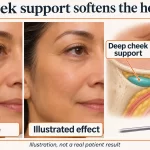
Eye creams with caffeine help swelling and visible vessels. Skin-lightening creams with mild retinol and low-dose, non-hydroquinone lightening agents help the color. When the darkness is really a shadow from a hollow, supporting the cheek can help.
Thin, crinkly lower-lid skin
- A small dose of tox can reduce crinkling caused by an active muscle. The dose matters: too much can keep the lid from closing fully when you sleep. And if you have fat bags or water retention, weakening that muscle can make the bags look worse, so it isn’t for everyone.
- Laser treatments, brought as close to the lower lid as is safe (never over the eyeball), improve the skin. Exosomes applied on the skin after the laser can add to that.
- Radiofrequency microneedling tightens skin, muscle and the septum. It can push bulges back to some extent and lift a falling cheek, though it doesn’t remove fat. It works gradually, and how much it helps can’t be predicted at the start.
- PRP and PRF can help the skin. Injecting them deep to regrow fat is possible in theory, but in practice it doesn’t give results, and they carry the same risks as other injections. PRP with microneedling isn’t the best treatment for this area, because it bruises a lot.
Crow’s feet vs. smile creases
Crow’s feet beside the eye come from the eye muscle squeezing, and tox is the most effective treatment for them. Lasers and radiofrequency improve the skin there too.
The creases just below the outer corner of the eye when you smile are different. They come mostly from the cheek moving up, not from the eye muscle, so tox has little effect on them. I’d rather tell you that before treatment than after.
Heavy upper lids
As the forehead, temples and skull lose volume, skin comes down and collects in the upper lid. Constant blinking thins that skin further.
Early changes can be improved:
- A small amount of tox in the upper outer part of the eye muscle, so it pulls the brow down less.
- Radiofrequency microneedling on the forehead to tighten the skin.
- Filler on the brow bone, in the brow and deep in the temple.
- A thread lift of the outer brow. It may not last long, because blinking constantly pulls against it, so a good dose of tox goes in first.
But when there’s real excess skin collected in the upper lid, the honest answer is upper blepharoplasty, which is surgery. It’s very hard to treat that non-surgically, and I won’t pretend otherwise.
The temples matter too
Hollow temples make the eye area look bonier. Filler deep on the bone near the brow, and hyaluronic acid filler or Sculptra in the wider temple, from the cheekbone arch up to the hairline, can lift gathered skin to some extent.
Talk it through with us
Most people have a mix of these, and the best plan usually combines a few treatments. Read more on our Eye Area page and our Tox page, text us at (201) 340-4809, or book a consultation online. Current offers are on our Promotions page.