By Dr. Keswani, MD — Forever Medspa & Wellness Center
Before almost anything else, people want to know one thing about filler: will I look like a different person, or will I still look like me?
The honest answer is that filler is meant to make a difference. But the difference you should see is a better version of you, a more refreshed person. Not someone new. How I get there comes down to how I look at your face before a single syringe is opened.
Your eyes already know what aging looks like
Think about how quickly you can tell someone in their 50s from someone in their 20s. It takes a fraction of a second, a blink. Our eyes are good enough at this that we can usually tell someone in their 20s from someone in their 30s.
What the eye is reading are patterns: which parts of the face have changed the most over time. So that is what I look for. When I find the area that has changed more than the others and restore it toward what it looked like before, or close to it, the face naturally looks younger and more refreshed. You still look like you, because I am giving back something that was yours.
I look at the whole face, in thirds
A filler assessment does not start with the filler. It starts with what you are asking for, and then with the question of what the best approach is. Filler is one of the approaches, not the only one.
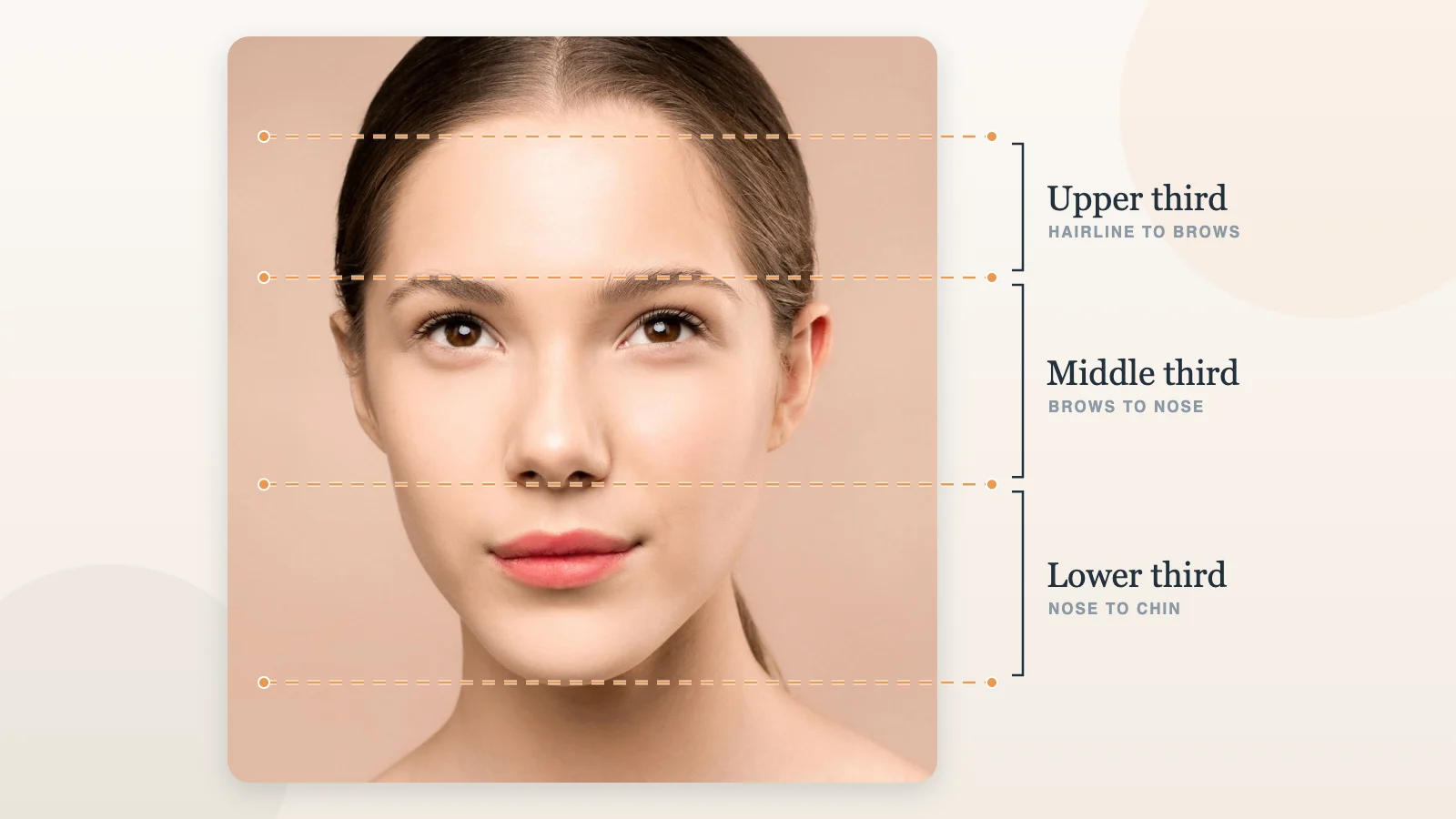
To check the overall balance of the face, I divide it into the upper third, the middle third and the lower third. Looking at each third separately lets me focus on each part.
This matters because the area that bothers you most is not always the area with the most change. Sometimes another part of the face has lost more. If I improve only the spot you asked about, the other areas can actually look worse next to it. So I listen to your request, look at the whole picture, and, where it makes sense, start with the part that needs the most help.
In each third I look at three things:
- Skin: lines, creases and the quality of the skin itself
- Volume: the fullness that has been lost under the skin
- Structure: the support close to the bone
In general, treating volume and structure higher up in the face helps the lower parts improve, simply because better structure supports the skin better. Skin changes usually need to be treated area by area.
Natural means balanced
So what is a “natural result”? To me, it is a face that is back in balance.
If your skin needs more help than your structure, then skin treatment comes first. That might be tox, a soft filler placed in the skin, or laser or radiofrequency, not more volume.
The opposite is also true. If one part of the face is much emptier, adding more to a part that is already on the fuller side looks unnatural. People do not age that way, and they do not lose weight that way. Anything pushed out of proportion looks unnatural.
The temples are a good example. They are an overlooked and underrated area. When the temples and the area under the cheekbones become hollow, filling only the cheeks makes the face look bonier and more out of proportion, not younger. Restoring the temples often gives a subtle change that makes the whole face look more refreshed, even if people can’t quite say what changed.
Same product, same area, different result
Here is something many people don’t realize: the same filler in the same area can give very different results. What makes the difference is the assessment, an understanding of how faces age, and the judgment to keep everything in balance. That is why I spend my time on the plan rather than on the product name.
How faces end up overfilled
An overfilled face is not a complication. It is an outcome nobody wanted, and it is possible. It usually comes from a few things:
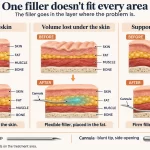
- Wrong place or wrong layer. Where filler goes, and how deep, changes how it looks.
- Ignoring balance. Filling one third of the face without looking at the other two.
- Ignoring drainage. Some areas drain slowly. On the side of the cheek, over the cheekbone, filler placed close to the surface can cause swelling, so I generally avoid placing it superficially there.
- Asking filler to do too much. Some concerns need a combination of treatments. A softer jawline, for example, often needs skin tightening with radiofrequency or a neck-muscle treatment alongside filler. Jowls are very hard to treat, and filler alone rarely lifts enough to remove them. Trying to force a change that filler cannot make is how faces get fuller and fuller.
All of this goes back to the first assessment. I don’t do filler because someone has simply decided, “I want filler.” I do it because you came in with a concern that is bothering you, and I believe it can be helped, with a minimal amount of risk.
Being comfortable with change
There is one more part of looking like yourself, and it is about how you see the result.
After filler, people sometimes notice things they never noticed before, things that were always there. And someone who is very anxious about change may see even a good change as a bad one. That is why I talk through expectations at the consultation. You should be comfortable with the change you are choosing.
It also helps to know that hyaluronic acid filler is reversible to a good extent. An enzyme called hyaluronidase can break it down if something needs adjusting. It is a safety net I hope you never need, and it is part of why filler is a much easier step to take than surgery.
You can read more about how we use filler on our Dermal Fillers page.
Start with a conversation
Every filler treatment at Forever Medspa starts with a consultation, every single time. Sometimes it is quick, but it always happens. Bring your questions and the thing that is bothering you most. I will tell you honestly what will help.
For pricing, text us or see our Promotions page.
- Book a filler consultation
- Text us at (201) 340-4809