

By Dr. Keswani, MD — Forever Medspa & Wellness Center
Informed consent is supposed to be a conversation, not a clipboard. Before any tox treatment in my clinic, I walk patients through what can actually go wrong — what’s common and trivial, what’s uncommon and annoying, and what’s rare enough that most injectors will never see it. Here is that conversation, written down.
The minor stuff: bumps and bruises
The needles we use are very thin, but they’re still needles. A small amount of bleeding or a bruise is always possible. Right after injection you’ll often see little mosquito-bite-like bumps at each injection point; they settle within about 30 minutes and all of them resolve. None of this affects your result.
The forehead: heavy brow versus the “Spock brow”
The forehead is where honest dosing judgment matters most, because it holds a genuine trade-off.
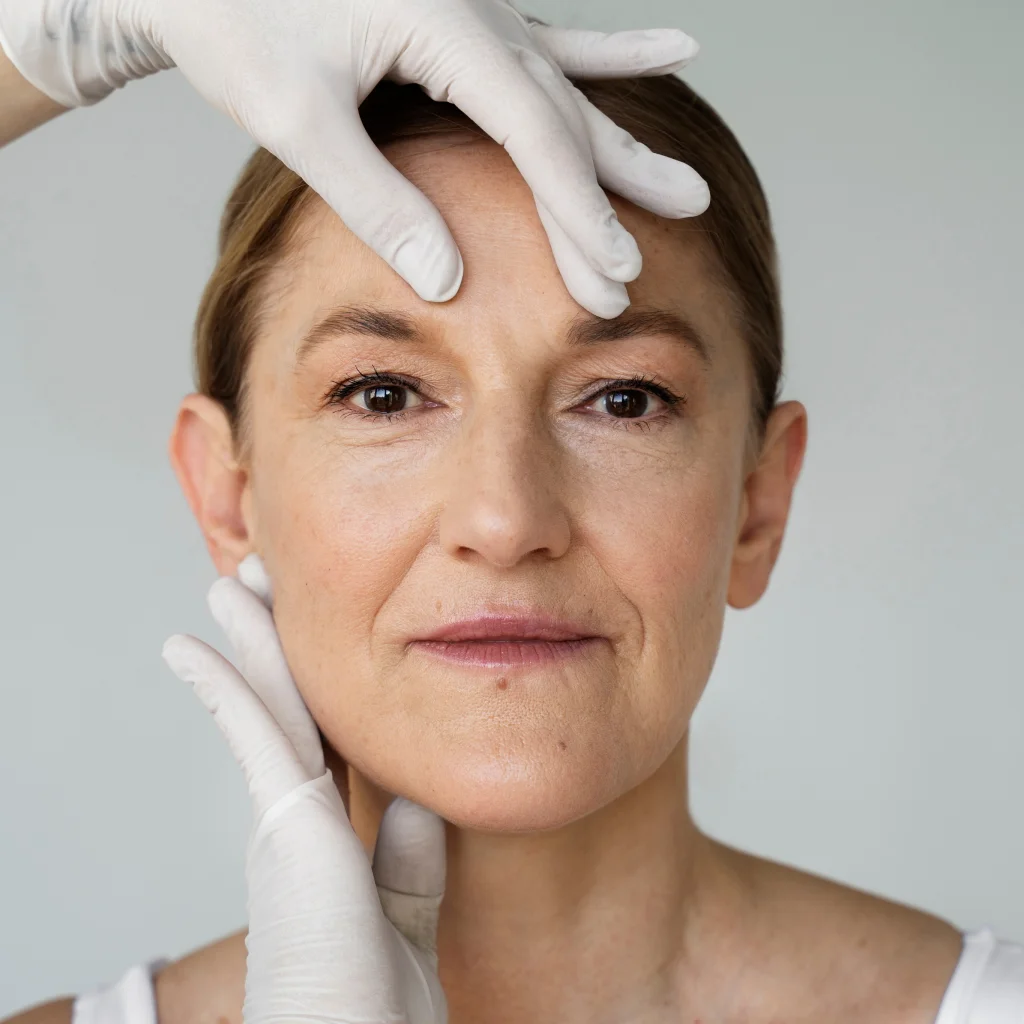
The frontalis — the muscle making your horizontal forehead lines — is also the muscle holding your eyebrows up. Treat it too strongly and the weight of the skin lowers the brows: a heavy-brow feeling, and with age there’s more skin to carry, so the effect is more noticeable. Rarely it can even feel like slight heaviness over your vision.
Here’s an insight from years of watching faces: many people reflexively lift their eyebrows the moment they look in a mirror, and they’ve only ever seen themselves that way. Those are the patients unhappiest with any brow heaviness at all — and part of my job is recognizing that before we dose.
Now the opposite error: inject only high on the forehead to avoid heaviness, and the untreated lower fibers keep pulling — you get peaked, arched lateral brows, the so-called Spock effect. The good news about both outcomes: they fade as the treatment wears off, and the dose plan gets corrected going forward.
The skill is the middle ground. I use a fading technique — lower doses low on the forehead, higher doses up top — so the brows stay supported while the lines soften. And some honest exclusions: a few people simply aren’t forehead candidates, and some have an upper-forehead wrinkle that can only be treated right at the hairline. Seeing where movement actually comes from, through sagging and skin and fat, is the art that comes with experience.
Eyelid droop (ptosis): the one everyone googles
This is the complication people fear most, so let me be precise about it. Ptosis — a droopy eyelid — is not a dose problem. The glabella (the “11s” between the brows) actually tolerates and appreciates higher doses. Ptosis is an anatomy accident: product reaching the levator palpebrae, the muscle that lifts the eyelid. Prevention is anatomical — staying away from the space above the eyeball and away from the small openings in the brow bone (the supraorbital and supratrochlear foramina) that connect to the orbit.
If it happens, I won’t sugarcoat it: there’s no quick fix. It’s very annoying, it can block part of your vision, and most cases improve on their own in about 3 to 4 weeks. Prescription oxymetazoline eye drops (an alpha-agonist, the Upneeq type) can lift the lid temporarily for about 4 to 6 hours at a time, which makes the waiting livable. Exceedingly rare cases in someone with a pre-existing weak levator could need surgery.
How often does it happen? In inexperienced hands, roughly 1 in 50. Experienced injectors in published studies run around 1 in 100. My own rate, across my career, is about 1 in 3,000. That gap between 1 in 50 and 1 in 3,000 is the entire argument for choosing your injector carefully.
Around the eyes and the lower face
- Lower crow’s feet that are driven by cheek movement can’t be blocked — doing so would weaken the smile or make it asymmetric — so those particular lines remain. Honest injectors tell you this upfront.
- Treating lower crow’s feet can make under-eye bags more prominent. I screen for this by asking about swelling and examining the fat before treating.
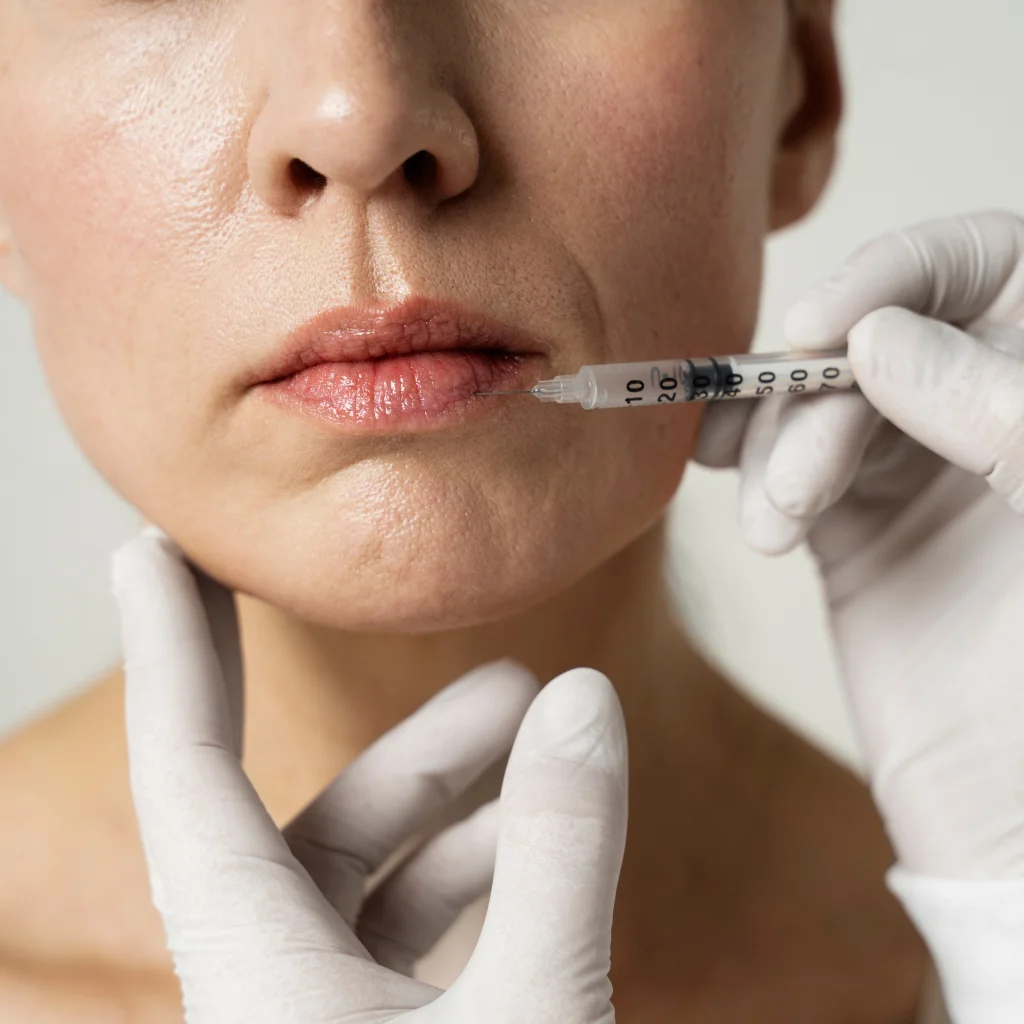
- Lip flips use deliberately tiny doses, because an overdosed upper lip gets very weak — drinking from a straw, holding a bottle, kissing all suffer.
- Treating the DAO or mentalis (the muscles that pull the mouth corners down or dimple the chin) can occasionally affect a neighboring muscle, the DLI, and produce a slightly crooked smile. It’s relatively rare, and it fades.
- One difference worth knowing: upper-face effects are only ever seen in the mirror, but lower-face tox is physically felt — something moving differently when you talk or drink. Expect that sensation; it’s not a complication.
The neck: platysma bands
Platysma band treatment sits near the structures around the vocal cords, so very rare swallowing or breathing effects are described. Prevention here, as everywhere, is anatomical knowledge of exactly what sits nearby. This is not an area for casual injecting.
Why technique matters more than brand
Notice what every item above has in common: almost none of it is about which product is in the syringe. We carry five of the six botulinum toxin brands in the US, and there’s no wrong choice among them — the real variables are the hands and the eyes. The craft is anatomy, plus adjusting the reconstitution strength for each area, plus the ability to visualize muscles moving under skin, fat, and sagging while you make expressions, plus actually understanding what the patient is asking for and making it real. That’s a skill that develops over years, and it’s the thing you’re really choosing when you choose a clinic.
If you’re still deciding between brands, I’ve written a separate plain-English comparison: Botox, Dysport, Xeomin, Letybo, Daxxify — how to choose.
Questions? Ask them before the needle
The best time for every question above is before your appointment, and I’d rather you ask than worry. Text us at (201) 340-4809 with questions or for pricing, book online at forevermedspanj.com/book/tox, and find current offers on our Promotions page. Every tox treatment here is physician-administered — and this conversation, in person, is part of it.